Why Frozen Pipes Are a Serious Business Risk
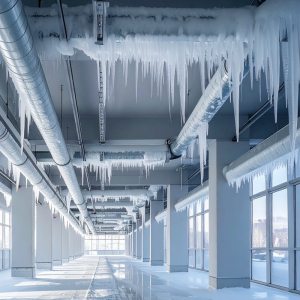
When water freezes, it expands. In a confined space like a pipe, this expansion can cause cracks or full ruptures, leading to flooding within walls, ceilings, and floors. In commercial settings, these incidents often result in:
Taking preventive steps now not only protects your property — it protects your bottom line.
Practical Steps to Prevent Frozen Pipes in Your Business
Here are effective techniques that commercial property managers and business owners should implement before or during extreme cold:
1. Maintain Consistent Indoor Temperatures
Keeping your building heated, even in non-occupied areas or after hours, is one of the most reliable ways to prevent freezing. Experts recommend maintaining a temperature no lower than 55 °F in areas with plumbing to keep water lines above freezing temperatures.
2. Insulate Pipes and Vulnerable Areas
Wrap exposed pipes — especially those in unheated areas like basements, attics, garages, or exterior walls — with foam pipe insulation, fiberglass sleeves, or heat-trace cables. This insulation reduces cold air contact and helps retain heat around plumbing lines.
3. Seal Drafts and Cold Air Penetration
Cold air infiltration can drastically lower the temperature around pipes. Inspect your property for gaps around doors, windows, loading docks, and utility penetrations. Use caulking, weatherstripping, and insulation to close these openings.
4. Let Water Drip During Extreme Cold
Water moving through pipes is less likely to freeze. During especially frigid nights, allow faucets in at-risk areas to run at a slow trickle. This simple practice can relieve pressure buildup and reduce freeze risk.
5. Monitor and Protect Fire Sprinkler Systems
Frozen sprinkler lines often lead to some of the most expensive water loss claims. Make sure designated heated spaces and mechanical rooms hosting sprinkler mains maintain safe temperatures, and inspect dry pipe valves and antifreeze systems where applicable.
6. Plan for Vacant or Low-Use Areas
Business closures, weekend shutdowns, or under-used spaces are particularly vulnerable. Maintain heat in these zones, install sensors for temperature monitoring, or consider draining water lines in areas that will remain unused for extended periods.
Responding if You Suspect a Frozen Pipe
Even with precautions, a freeze can still occur. If you suspect a frozen pipe:
Shut off the main water supply immediately.
Open nearby faucets to reduce pressure.
Increase heat around the freezing location.
Avoid open flames or unsafe heat sources.
Call a licensed plumber for safe thawing or repairs.
How Trunnell Insurance Services Can Help
While prevention is your first line of defense, having the right insurance strategy ensures that if damage does occur, your business remains protected:
Commercial property coverage that includes water damage and freeze-related losses
Risk assessments to identify vulnerabilities
Claims advocacy to support you through the repair and recovery process
Risk-management consultation to reduce future exposures
A proactive winter strategy — combined with the right insurance coverage — helps mitigate cold-related losses and preserves your financial stability.